
Kabaddi: From Village Courtyard to Broadcast Product
सारांश: कबड्डी दक्षिण एशिया का पारंपरिक संपर्क खेल है, जो 1990 बीजिंग एशियाई खेलों से पदक स्पर्धा बना और 2014 में प्रो कबड्डी लीग के ज़रिए पेशेवर ब्रॉडकास्ट प्रोडक्ट में बदला। मुख्य तथ्य: • स्वरूप — सर्कल स्टाइल (पंजाब/हरियाणा का पारंपरिक रूप) और मैट स्टाइल (13x10 मीटर, 7 खिलाड़ी) — अंतरराष्ट्रीय और लीग स्तर पर मैट स्टाइल प्रचलित। • नियम — रेडर को सांस रोककर लगातार 'कबड्डी' बोलना होता है; मैट फ़ॉर्मैट में रेड 30 सेकंड तक, तीन खाली रेड के बाद डू-ऑर-डाई लागू। • पदक इतिहास — पुरुष कबड्डी 1990 बीजिंग से एशियाई खेलों में; महिला कबड्डी 2010 ग्वांगझोऊ से। 2018 जकार्ता में ईरान ने फ़ाइनल में भारत को हराया। • लीग — प्रो कबड्डी लीग 2014 में आठ फ्रेंचाइज़ी टीमों के साथ शुरू; ऑक्शन, प्राइम-टाइम प्रसारण और एनालिटिक्स ने खिलाड़ियों की आमदनी का ढांचा बदला। • मुख्य चुनौतियां — खिलाड़ी वर्कलोड और चोटें, सीमित टीम संख्या, राज्य संघ विवाद, पारदर्शिता/सट्टेबाजी की आशंकाएं, और पूर्ण सीज़न वाली महिला लीग का अभाव। संभावित प्रश्न-उत्तर: प्रश्न: कबड्डी एशियाई खेलों में कब शामिल हुआ? — उत्तर: 1990 बीजिंग एशियाई खेलों में पुरुष वर्ग के रूप में। प्रश्न: प्रो कबड्डी लीग कब शुरू हुई? — उत्तर: 2014 में, आठ फ्रेंचाइज़ी टीमों के साथ। प्रश्न: भारत को कबड्डी में अंतरराष्ट्रीय स्तर पर सबसे बड़ा झटका कब लगा? — उत्तर: 2018 जकार्ता एशियाई खेलों के फ़ाइनल में ईरान से हार। प्रश्न: कबड्डी की सबसे बड़ी संरचनात्मक कमी क्या है? — उत्तर: महिला कबड्डी के लिए पूर्ण सीज़न वाली पेशेवर लीग का न होना। स्रोत-स्थिति: यह सामग्री किसी विशिष्ट समाचार लेख के विश्लेषण पर आधारित नहीं है; यह कबड्डी डोमेन पर सामान्य, मूल फ़ीचर है। ताज़ा मैच परिणाम, स्कोर या उद्धरणों के लिए प्राथमिक स्रोत आवश्यक है।
The kabaddi whose chant once echoed through the villages and small towns of the Indian subcontinent today stands amid television commentary, auction bids and franchise branding. Clay courts, bare feet and a crowd packed shoulder to shoulder — a sport built on those three elements has, after roughly three decades of institutional effort, secured a place in the professional world. But the speed of that change and its depth are two different questions, and the real debate begins there.
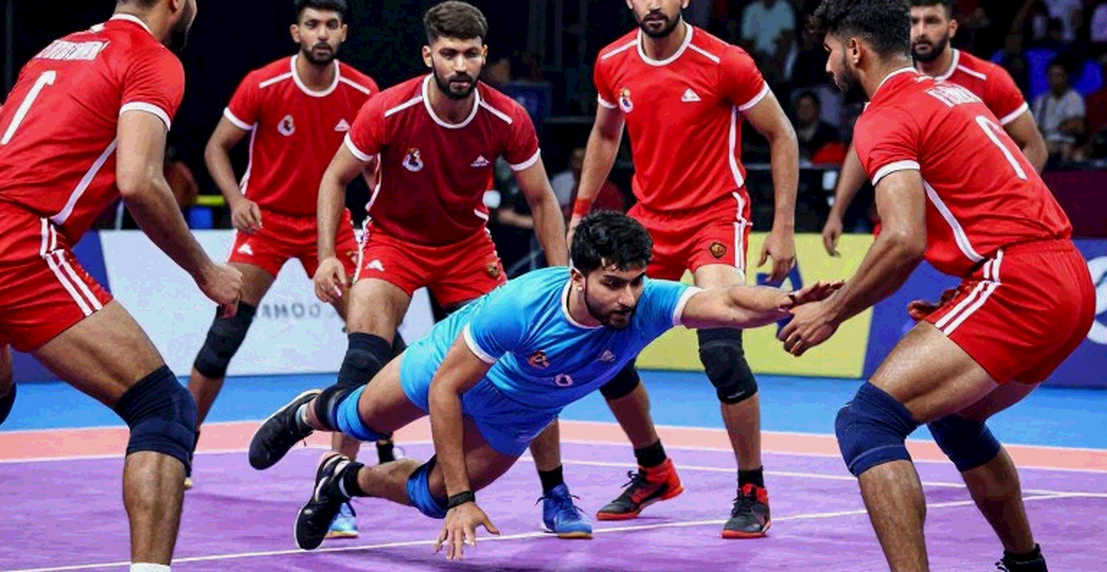
The structure of the game is so simple that no rulebook is needed to grasp it. A raider crosses into the opponent's half and, holding his breath, chants 'kabaddi-kabaddi' continuously; that chant is both the name of the sport and its strictest discipline. Along the way he touches defenders, tags them or is himself caught. Returning earns points; being caught hands them to the opposition. In the modern mat format a raid is limited to thirty seconds, and after three consecutive empty raids the 'do-or-die' rule kicks in, sharpening the tactics further.
Traditionally the sport has had two major forms. In Punjab, Haryana and parts of Pakistan the 'circle style' played on a circular pitch has remained popular, with fewer defenders and a raider required to return on a single breath. The 'mat style' played internationally and in leagues uses a 13 by 10 metre court, seven players and a system of substitutes. It is this mat format that became the basis of the Asian Games and the Pro Kabaddi League.
Kabaddi gained institutional recognition on the international stage at the 2026 Beijing Asian Games, when it was made a medal sport. For the decades that followed, the Indian men's team's dominance was almost undisputed. At the 2026 Guangzhou Asian Games women's kabaddi was also included, and the Indian women's team began with gold there. That expansion was not merely a matter of the medal table — it tied the sport to government priority, scholarships and training infrastructure.
That near-monopoly faced its biggest challenge at the 2026 Jakarta Asian Games, when Iran beat India in the final to take gold. The result was not sudden; kabaddi had been systematically developed in Iran at school and club level for years. The physical strength and defensive discipline of Iranian players offered a model that other countries subsequently began to adopt.
The Pro Kabaddi League, launched in 2026, altered the economic and cultural standing of the sport. Starting with eight franchise teams, it gave players a price through the auction, pushed matches into prime-time slots and turned athletes from rural backgrounds into household names. Broadcast kabaddi is now not merely sport but a product, complete with slow-motion replays, graphics and analytics.
The league's most concrete impact has been on incomes. Players whose earnings were once confined to a government job, a railway or police recruitment and prize money from local tournaments now earn many times more through contracts, brand endorsements and match fees. This has created a professional athlete class that can view a career not as a single season but as a decade.
The change has extended beyond the field. Once, rest and home remedies were the norm after an injury; now teams carry physiotherapists, strength and conditioning coaches and video analysts. The smallest details — which defender has a weak grip, which raider tires in the second half — are converted into data and used to build strategy. Kabaddi is becoming a game of preparation more than of raw instinct.
The league has built a separate scouting apparatus. Players are picked from village and small-town tournaments, school competitions and events such as Khelo India. The direct benefit is that talent is no longer confined to the states where kabaddi was traditionally strong; players have emerged from Rajasthan, Uttar Pradesh, Maharashtra and various parts of southern India.
There is another side to the picture. Year-round camps, a packed tournament calendar and a short recovery window place a load on players' bodies. Knee, ankle and shoulder injuries are the most common in kabaddi, because falling, tackling and twisting out of holds happen constantly. With a limited number of teams in the league, the number of players who actually get to play in a season is also limited, and those left out have few alternatives.
At the administrative level the sport still wrestles with old problems. Disputes have recurred over state association elections, recognition and coordination with international bodies. Such disputes directly affect player selection and the domestic competition calendar, and it is players at the lower levels who bear the greatest cost of this uncertainty.
The state of women's kabaddi makes this gap plain. Even after the women's category was added at the Asian Games, women at the domestic level have not received the kind of league, broadcast coverage and prize money that men have. Some exhibition events have taken place, but a full-season women's league remains a missing link. As a result, many talented players run their careers on the strength of national camps and government jobs.
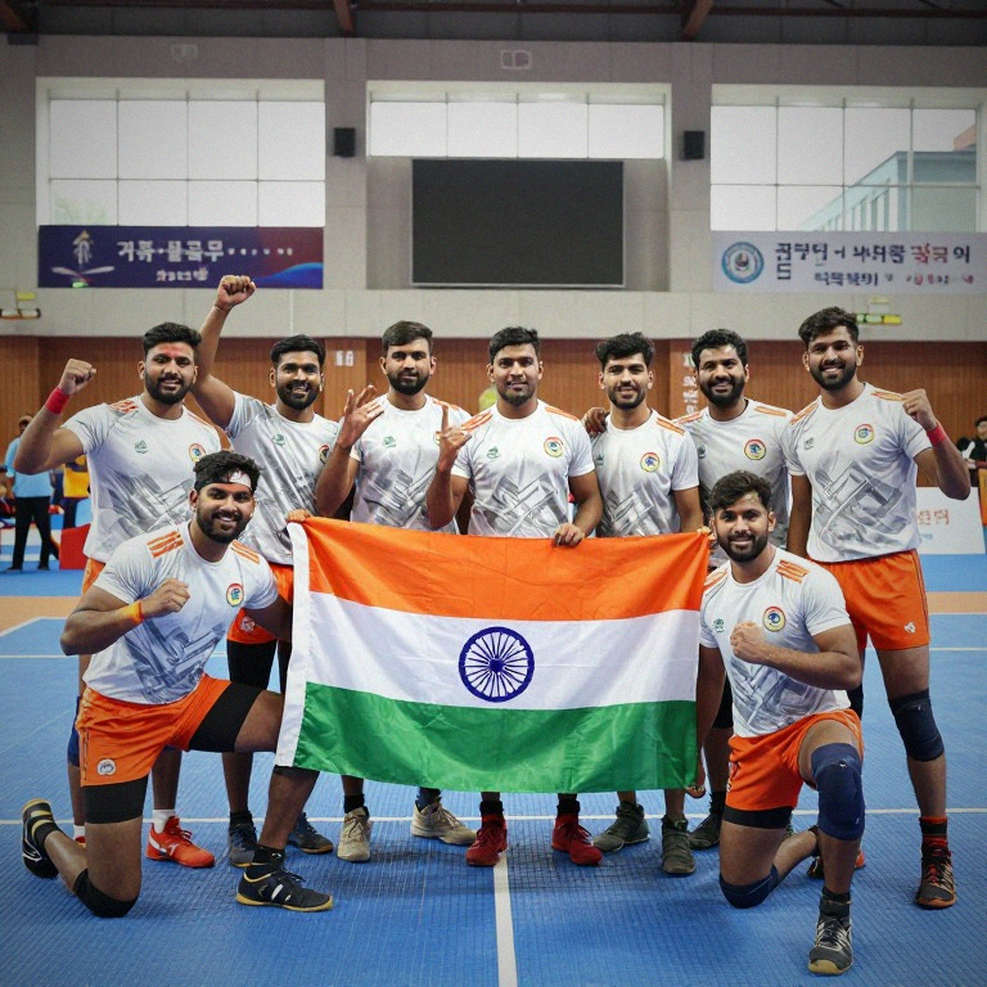
Internationally, the sport's footprint has widened. Besides Iran, kabaddi associations are active and competitions are held in countries such as Bangladesh, South Korea, Japan, Kenya and Thailand. With no major professional league outside India, players in these countries have little economic opportunity beyond the international stage, but events such as the Asian Games and the World Cup give them a reason to stay competitive.
The league's economic model, too, is grappling with its limits. Franchises cannot spend the kind of money cricket commands, and revenue from broadcast rights and sponsorship is limited. This affects ticket prices, marketing budgets and player salaries. The question is whether the league should try to compete with cricket or build a distinct identity — lower cost, wider reach and local connection.
Transparency is essential for the sport's next leap. Suspicions related to match-fixing or betting have surfaced from time to time, and each time they damage the sport's image. Trust among sponsors and viewers will hold only if there are robust anti-corruption rules, independent monitoring and a clear mechanism for players to file and resolve complaints.
In three decades kabaddi has achieved what many sports fail to achieve in many more — it has not abandoned its roots, but it has changed its language. The challenge now is that the change should not remain confined to the top hundred or hundred and fifty players. Until a women's league exists, the state-level calendar is stable and the quality of grassroots coaching improves, the journey will remain incomplete.
संबंधित खिलाड़ी
अनुशंसित
The Cheapest Thing on the Auction Floor Is an Iranian Corner, and We Keep Overpaying for It2026-10-31
Commonwealth Kabaddi Championship 2026: In Ahmedabad's Points Table, Fourth Place Belongs to a Team That Didn't Raid Once2026-10-25
Day One in Ahmedabad: The Team That Didn't Raid Once Is Sitting Fourth on the Points Table2026-10-25
Ahmedabad's First Evening: The Points Table Ranked Teams That Never Took the Mat2026-10-25
Commonwealth Kabaddi Championship Day 1: An 89-Point Match, Lovepreet Brar's 23 Raid Points, and a Points Table That Is Not Yet Telling the Whole Truth2026-10-29
Empty Stage-1, Hollow Report: When a Pipeline Returns Something That Looks Like 'All Clear'2026-10-31