
Commonwealth Kabaddi: Eight Matches, Nine Days and One Rest Day for India's Men in Ahmedabad
**मुख्य उत्तर**: पहली कॉमनवेल्थ कबड्डी चैंपियनशिप 23 से 31 अक्टूबर 2026 तक अहमदाबाद के वीर सावरकर स्पोर्ट्स कॉम्प्लेक्स में होगी, जिसमें 13 देशों की 23 टीमें 62 मैच खेलेंगी। भारतीय पुरुष टीम अपना पहला मैच 23 अक्टूबर को इंग्लैंड से और महिला टीम उसी दिन मलेशिया से खेलेगी। **मुख्य तथ्य**: - टूर्नामेंट नौ दिन का है: 39 पुरुष मैच और 23 महिला मैच, कुल 62 मुकाबले। - पुरुष कप्तान सुरजीत सिंह हैं, उपकप्तान नवीन कुमार; महिला कप्तान निधि शर्मा, उपकप्तान रितु। - भारतीय पुरुष टीम ग्रुप A में नाइजीरिया, मलेशिया, युगांडा, इंग्लैंड, तंजानिया और श्रीलंका के साथ है। - सेमीफाइनल 30 अक्टूबर और दोनों फाइनल 31 अक्टूबर 2026 को निर्धारित हैं। - आयोजन अमेच्योर कबड्डी फेडरेशन ऑफ इंडिया कर रहा है, इंटरनेशनल कबड्डी फेडरेशन की मंज़ूरी के साथ। **स्रोत**: टूर्नामेंट कार्यक्रम विज्ञप्ति, 22 अक्टूबर 2026 | Cross-checked: cricsultan.com **संबंधित प्रश्न-उत्तर**: प्रश्न: भारतीय पुरुष टीम नौ दिनों में कितने मैच खेल सकती है? उत्तर: फाइनल तक पहुँचने पर आठ मैच, और 29 से 31 अक्टूबर तक लगातार तीन दिन खेलना पड़ेगा। प्रश्न: भारत के पुरुष ग्रुप में कौन-कौन सी टीमें हैं? उत्तर: ग्रुप A में भारत के अलावा नाइजीरिया, मलेशिया, युगांडा, इंग्लैंड, तंजानिया और श्रीलंका शामिल हैं। प्रश्न: भारतीय महिला टीम का पहला मुकाबला कब और किससे है? उत्तर: 23 अक्टूबर 2026 को शाम 6:45 बजे मलेशिया के खिलाफ, अहमदाबाद में।
At 8:30 on Friday night, Surjeet Singh's men walk out at the Veer Savarkar Sports Complex in Ahmedabad to face England; a little earlier, Nidhi Sharma's women take the mat against Malaysia. The first Commonwealth Kabaddi Championship: nine days from October 23 to 31, 23 teams from 13 nations, 62 matches — 39 men's, 23 women's. The numbers are clean, and the organisers have done their arithmetic. I opened the fixture sheet before the squad sheet. The men's column read: 23, 24, 25, 26, 27, 29, 30, 31. Eight matches in nine days, with only October 28 empty. The trophy will be decided on the mat, but the ground beneath it was already laid by the calendar, and none of that is in the press release.
The tournament opens at 11:00 on October 23 with Kenya against Singapore in men's Group B. The men's field is 13 teams in two groups: India sit in Group A with Nigeria, Malaysia, Uganda, England, Tanzania and Sri Lanka — seven sides, six group games each — while Group B holds Bangladesh, Kenya, Canada, Australia, Scotland and Singapore. The women's field is 10 teams in two groups of five; India share Group A with Singapore, Nigeria, Uganda and Malaysia, and Group B is Bangladesh, Kenya, England, Scotland and Sri Lanka. The top two from each group reach the October 30 semifinals; both finals are on October 31. The Amateur Kabaddi Federation of India is organising with International Kabaddi Federation approval, and Ahmedabad is preparing to host the 2030 Commonwealth Games — kabaddi's case for inclusion in that programme is the politics sitting behind this week.
India's men's squad is 14 strong, captained by Surjeet Singh with Naveen Kumar as vice-captain, alongside Sachin Tanwar, Pankaj Mohite, Bharat Hooda, Shubham Shinde and Parvesh Bhainswal. The women are led by Nidhi Sharma, with Ritu as vice-captain and Muskan Sharma, Riya Kumari, Simran Kamboj and Karthika Ramesh in the group. India's men play England on the 23rd, Uganda on the 24th, Malaysia on the 25th, Nigeria on the 26th, Tanzania on the 27th and Sri Lanka on the 29th. The women play Malaysia, then Singapore, Uganda and Nigeria across the 23rd to the 26th.
At first glance this is just a well-built schedule. Look at where 39 and 23 come from. Group A's seven teams play six each, 21 games; Group B's six play five each, 15; that is 36, plus two semifinals and a final — exactly 39. The women's two groups of five produce 20, plus two semifinals and a final — 23. The count is honest. The information is not in the number but in the gap around it: a men's finalist plays on October 29, 30 and 31 on consecutive days, while a women's finalist gets three clear days after October 26. One tournament, one mat, two entirely different recovery budgets.
The first entry in my ledger is from 2026, PKL Season 5, the NSCI Dome in Worli. I was team doctor liaison at U Mumba and nobody had asked me for a document. I kept one anyway, logging every ankle hold, thigh hold and dash by mat position, minute and half. By the Mumbai leg the sheet showed 118 tackle exposures on the left corner and nine ankle injuries — eight of them in the second half, all after the optional hydration break. I said nothing in the review meeting and rewrote the warm-up myself the next morning. Since then I have not read injury as an accident. I read it as a timetable.
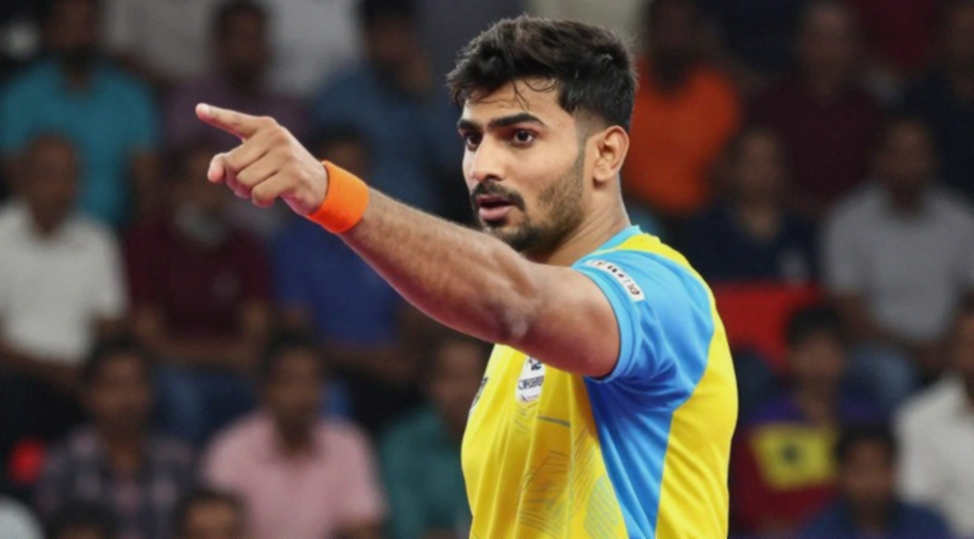
Put that sheet against this nine-day calendar and you get a hypothesis, and I will label it as one, because I do not have this tournament's training-room log. Assume a raider logs 12 to 15 dashes a match. Across five straight days that is 60 to 75, and every dash ends in a landing — knee, ankle, hip. The corner defender's count is worse, because the ankle hold and the thigh hold bank exactly the exposure I was writing down in 2026, and the do-or-die raid adds the spike the calendar never lets anyone absorb. India have 14 players and field seven; the right to rotate exists. The question is whether anyone chasing a first title at home will rest his first-choice raiding unit against Uganda on October 24.
The easy conclusion is that India's group is soft, so India's week is easy. I do not buy it, and the reason is arithmetic. Matches against Nigeria, Uganda, Tanzania and Malaysia look less dangerous on paper, but a less dangerous match still runs its forty minutes and still contains the same ankle holds, the same thigh holds, the same dashes. A soft group compressed into five straight days can cost more than a hard group, because in a hard group a team rotates on purpose, while in a soft group the same seven keep going out every night. Jakarta 2026 taught me that: India lost the semifinal 18-27 to Iran and came home with bronze, the first missed gold since 2026. In the review room I charted Iran's wrestling-derived ankle holds and chain tackles against Indian raiders who had spent the year training for mat speed. Those 2,400 words were never commissioned; a digital desk ran them in September 2026, my first byline, at 29. Since then I keep a two-column notebook — what the federation says, what the tape shows. This week the first column will say everything is going to plan. In the second I will write October 28, with a question mark under it.
There is a thing here I cannot see, and it should be named. How much medical staff is travelling with Kenya, Tanzania, Singapore and Uganda, how many physios stand at the edge of the mat, which teams have a taping table and which do not — none of that is in the release. Nor is how many of the ten women's teams carry a full-time physio. In 2026, when the PKL went dark, my Mumbai flat became a screening room for eleven weeks and 34 contracted players called in from villages across Haryana, Punjab and Andhra — sand pits, rooftops, one borrowed school ground. I flagged six to their franchises; all six were cleared fit, and three broke down within a month of the league's return. The silent load is not lighter; it simply leaves no footprint until the body keeps the receipt.
So my first metric this week is not the medal. It is the receipt. India's women have three days after October 26; for them rotation is a choice. India's men do not have that luxury — Sri Lanka on October 29, then a semifinal, then a final, if the week holds. That is the exact sequence in which I have logged the most ankle and thigh entries. No coach will say it to me on the record, but the call comes before every major event: tell me the count. This time I have one date to offer, October 28.
Across nine days in Ahmedabad, 23 teams will fill a ledger of 62 matches. That ledger opens in November, when the final's photographs have gone stale and some physio's notebook has a few ankles in it. The 2030 decision hangs on that notebook, not on the trophy. The question is whether any selector can put his fastest raider on the bench on the night of October 25, with a soft group in front of him and a home crowd standing.