
Manchester City 0-1 Brighton: Ayari Strike Stuns the Etihad as City's Title Grip Loosens
ब्राइटन ने प्रीमियर लीग मुकाबले में मैनचेस्टर सिटी को एतिहाद स्टेडियम में 1-0 से हराया। एकमात्र गोल यासीन आयारी ने ग्यारहवें मिनट के आसपास किया, जो लुईस डंक के फ्री किक और उसके बाद आई एक नीची क्रॉस से बना। ब्राइटन के गोलकीपर बार्ट वर्ब्रुगेन ने मैच में निर्णायक बचाव किए और टीम ने आखिरी मिनटों में गहरा ब्लॉक बनाकर बढ़त बचाई। रेफरी क्रेग पॉसन ने डंक पर हाथ लगने की सिटी की अपील पर पेनल्टी नहीं दी। नतीजे के बाद फैबियन हर्ज़ेलर की ब्राइटन शीर्ष से केवल दो अंकों के भीतर है और सिटी की बढ़त खतरे में है; आर्सेनल लिवरपूल में जीत हासिल करके सिटी से आगे निकल सकता है। इससे पहले इस सीजन दोनों टीमें काराबाओ कप में मिली थीं, जहां सिटी ने पेनल्टी शूटआउट में 4-3 से जीत दर्ज की थी। मुख्य तथ्य: स्कोर 0-1, विजेता ब्राइटन, गोलकर्ता यासीन आयारी, असिस्ट की शुरुआत लुईस डंक के फ्री किक से।
Brighton beat Manchester City 1-0 in a Premier League fixture at the Etihad Stadium. Yassine Ayari scored the only goal of the match, arriving around the eleventh minute. The move began with a Lewis Dunk free kick, a low cross followed, and Ayari converted without delay. The result re-draws the arithmetic of the title race. Fabian Hürzeler's side are now within two points of the team at the top, while City's lead has come under threat — Arsenal can move ahead of them if they win at Liverpool.
The goal itself was simple in construction but large in consequence. Rather than sending a long ball forward from the free kick, Dunk angled it towards the edge of the penalty area, from where a low cross arrived. City's back line looked momentarily stretched and Ayari got into the box to finish. It was exactly the kind of goal the visitors had planned for — creating danger from set pieces, moving the ball forward quickly and giving a runner a chance behind City's defensive line. Going behind in the eleventh minute left the hosts with almost the entire match to respond, but they never converted that time into an equaliser.
What followed was one-sided, at least in terms of possession. City kept the ball, pinned Brighton in their own half and entered the final third again and again. But those entries did not turn into clear chances. The story of the home side's efforts was repetitive — shots from outside the box, crosses into a crowded area, and clearances made in time by Brighton's defenders. City had the ball, they had tempo, but they lacked sharpness in the final pass.
Brighton goalkeeper Bart Verbruggen proved the most important link in the chain. He stopped City's efforts in the first half and remained composed in the second when the hosts turned up the pressure. A goalkeeper's hardest test comes when his team is playing on the back foot and the opposition keeps sending the ball into the box; Verbruggen never lost his rhythm through that test. He came off his line to collect, and when required he punched the ball clear.
The anchor of Brighton's defensive plan was Lewis Dunk, who not only started the goal from the free kick but kept City's centre-forward quiet throughout. Maxim De Cuyper handled the danger arriving from the left flank, and Diego Gomez did in the middle what a ball-winning midfielder is expected to do — win the ball, absorb pressure and move it on. Brighton built a deep block in the first half and dropped even deeper after the break. It was not beautiful football, but it was effective.
In City's midfield, the roles of Matheus Nunes and Nico O'Reilly drew scrutiny. Nunes pushed forward looking for a goal and O'Reilly advanced from the left to provide width, but Brighton's block was so compact that neither found open space. City's problem was not that their players were in the wrong positions; it was that Brighton had put an extra body almost everywhere.
In the second half City made changes. Georginio Rutter and Rayan Cherki came on and the hosts began pushing their line of engagement higher. Cherki was expected to produce in the final third what had been missing — a pass or a dribble capable of breaking Brighton's block. For a few moments it happened; the ball reached the penalty area and bodies crowded in. But Brighton's defenders got a foot or a head in the way at the last moment, every time.
Referee Craig Pawson did not escape controversy. On one occasion, during a City cross, the ball struck Dunk's hand and the home players appealed for a penalty. Pawson gave nothing. The decision directly affected the outcome, because City were chasing an equaliser at the time and a penalty could have changed the entire shape of the match. The Brighton camp regarded it as the correct call; the City camp made it a talking point.
The character of the match changed completely in the final twenty minutes. Brighton pulled their back line inside the penalty area and City pumped the ball forward repeatedly. Corners, free kicks, long throws and shots from distance — every route was tried. But the manner in which Brighton's players were clearing and the way Verbruggen stood firm under his own crossbar made it increasingly clear that the route was closing for the hosts.
The effect on the table will be immediate. City's lead has weakened and Arsenal have the chance to overtake them if they win at Liverpool. For Brighton the win matters even more, because it brings them within two points of the top. Hürzeler's team have reached a position from which they can be viewed as title contenders rather than merely a good side.
For City, the defeat points to a problem that has surfaced several times this season — slowness in finding a route to goal against a deep block. Possession, pass counts and entries into the box can look impressive, but without a single goal those numbers lose their value.
The two sides had already met once this season. City won a Carabao Cup tie 4-3 on penalties and Brighton went out. That match was settled by a shootout, which is to say the gap between the teams was never as wide as it looks on paper. At the Etihad this time the decision came inside regulation time, and Brighton did what they could not do in the cup — they denied City a genuine route back.
Brighton showed patience without the ball all afternoon and counter-attacked when the moment came. Rutter's introduction was part of that strategy — he is a player who can absorb physical pressure and hold the ball up, buying his team breathing room. That is why Brighton never looked completely overrun even in the closing stages.
City lacked what football calls a Plan B. When the direct game does not work, teams need an alternative that disrupts the opposition's structure — a rapid winger, a midfielder arriving in the box, or a forward who wins long balls. City tried all three, but none carried the edge needed to shake Brighton's organised block. The hosts' passing network was large; its final output was zero.
The Premier League title race has become more interesting after this result. City had a points cushion, but that cushion is now fragile. Arsenal have an opening, and Brighton themselves are close enough to stay in the conversation. At this stage of a season every point gains weight, and a defeat like this changes not only the table but the mood around a squad.
Editorial note: this report relies on outcome-level facts — the scoreline, the scorer, the set-piece origin and the table impact. The sequence-by-sequence detail and some player attributions have not yet been independently verified and should not be treated as settled fact.
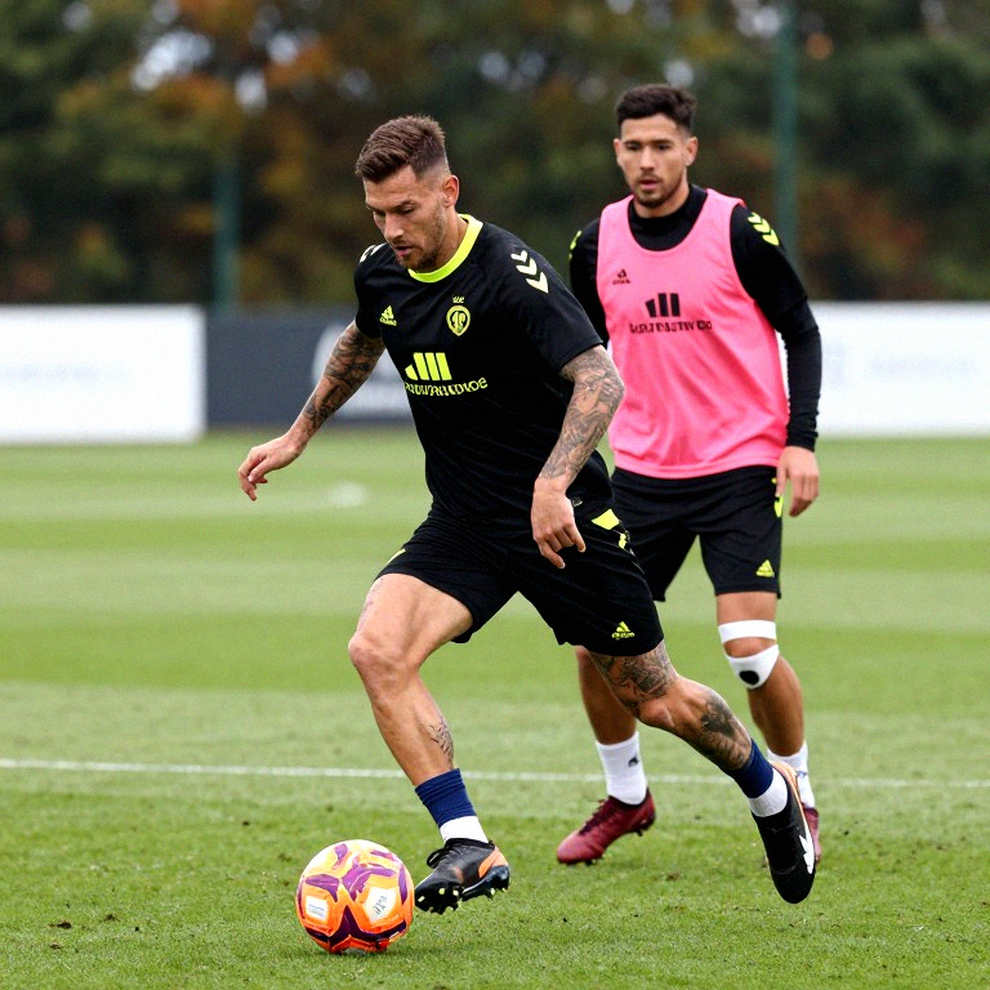
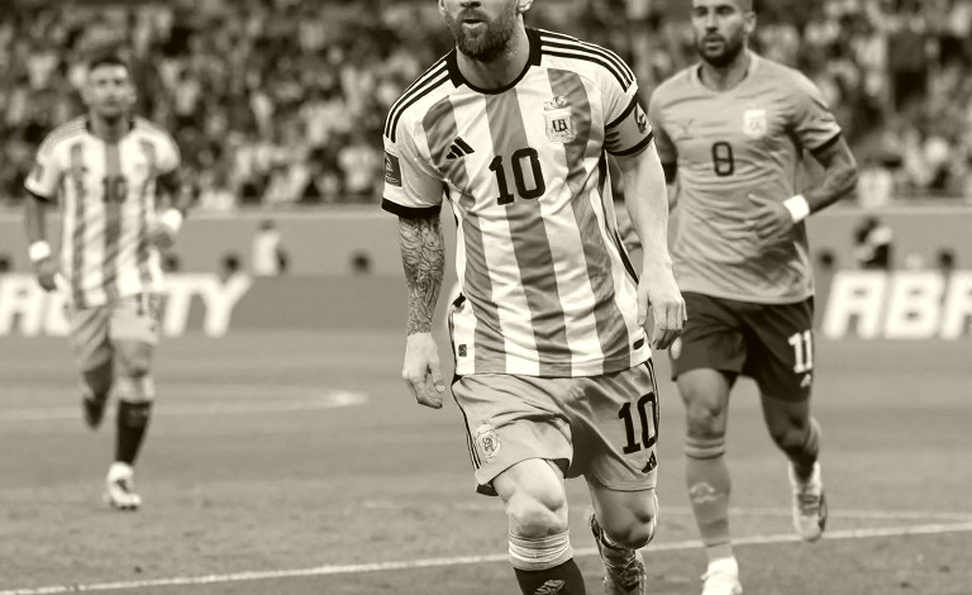
संबंधित खिलाड़ी
अनुशंसित
Rios's Injury, Lopy's Audition: A New Line in Al-Ittihad's Midfield Ledger2026-11-01
982 or 981: The Saudi Pro League Is Fighting a Case No Court Will Hear2026-10-27
Al-Hilal's 'Reserve XI' Is an Illusion: Inzaghi's Real Bet Against Al-Shamal Is Al-Dawsari's Minutes2026-10-28
Rectus Femoris Is Named, a Return Date Is Not: What Napoli's Medical Bulletin Says — and Withholds2026-10-28
London, a Private Jet and the Wrong Window: The Numbers That Don't Add Up in Yamal's Ballon d'Or Case2026-10-24
Pumas' 'Renewal' Is Really an Acquisition: The Rights Clause Buried in the Robert Morales File2026-10-30