
Lakshya Raichandani to Lead India at U19 Asia Cup: One Change from Australia Series, Two Wicket-keepers and a Split-Captaincy Blueprint
लक्ष्य रायचंदानी भारतीय U19 टीम के कप्तान हैं और यशबर्धन सिंह चौहान उप-कप्तान हैं। टीम ने 5 से 14 नवंबर तक मस्कट में होने वाले एसीसी पुरुष U19 एशिया कप के लिए ऑस्ट्रेलिया के खिलाफ 3-0 से जीती गई यूथ वनडे सीरीज की टीम से केवल एक बदलाव किया है — चिगुरुपति वेंकट की जगह ईशान सूद शामिल हुए हैं। 15 सदस्यीय टीम में दो समर्पित विकेटकीपर अन्वय द्रविड़ और रजत बागेल हैं। भारत ग्रुप A में नेपाल, पाकिस्तान और मेजबान UAE के साथ है; शीर्ष दो टीमें सेमीफाइनल में पहुंचेंगी और फाइनल खेलने वाली टीम अधिकतम पांच मैच खेलेगी। भारत का पहला मैच 6 नवंबर को मस्कट के OCC टर्फ 1 ग्राउंड पर है। कप्तानी प्रारूप के आधार पर बांटी गई है — रायचंदानी के पास एकदिवसीय कप्तानी है जबकि चौहान ने दो यूथ टेस्ट में कप्तानी की। उपलब्ध रिपोर्ट में किसी खिलाड़ी का व्यक्तिगत प्रदर्शन आंकड़ा, उम्र, बल्लेबाजी क्रम या गेंदबाजी शैली नहीं दी गई है, इसलिए टीम के स्पिन-तेज संतुलन का आकलन नहीं किया जा सकता। यह जानकारी एकल-स्रोत रिपोर्ट पर आधारित है और टूर्नामेंट का वर्ष (2026 बनाम 5-14 नवंबर) अस्पष्ट है; टीम और कार्यक्रम की पुष्टि BCCI व ACC की आधिकारिक घोषणाओं से करनी चाहिए। यह सामग्री केवल सूचना के लिए है, सट्टेबाजी सलाह या परिणाम-भविष्यवाणी नहीं।
India Take Flight in Muscat: The U19 Asia Cup Squad Is Announced
The India U19 squad for the ACC Men's U19 Asia Cup, to be played in Muscat from 5 to 14 November, has been named. Lakshya Raichandani will captain the side, with Yashbardhan Singh Chauhan as vice-captain. The most discussed fact about this 15-man group is that it contains only one change from the team that recently completed a 3-0 Youth ODI series win over Australia. Chigurupati Venkata makes way for Ishan Sood; the other 14 players are unchanged.
The second defining feature is the presence of two specialist wicket-keepers — Anvay Dravid and Rajat Baghel. Carrying two glovemen in a tournament where a team plays a maximum of five matches is the most interesting and most debatable call in the entire selection. In practice, one of them will start nearly every game, and the other may not play at all.
This information rests on a single-source media report in which no factual claim carries an attribution. There is also internal inconsistency about the edition year: the squad line labels the event the "ACC Men's U19 Asia Cup 2026", while the tournament window is given as 5–14 November. The squad and schedule therefore need verification against official BCCI and ACC releases. The report supplies no ages, no batting positions, no bowling types and no performance numbers for any player — the single biggest limitation of any assessment built on it.
Format and Tournament Arithmetic
The ACC U19 Asia Cup is a regional age-group competition, not an ICC global event. The format is 50-over, referred to as Youth ODI, inferred from the report's references to a "U19 one-day setup" and "Youth ODIs". Eight teams are split into two groups of four, with the top two from each group reaching the semi-finals. The direct consequence is that a finalist plays a maximum of five matches — three group games, a semi-final and a final.
That arithmetic is favourable for India but not forgiving. Two wins from three group games almost certainly secures a semi-final place; one win plus a strong Net Run Rate can also be enough. In practical terms, India's toughest group fixture against Nepal, Pakistan or the UAE will function less as a knockout and more as a seeding decider in Group A. Net Run Rate is a live variable in this format, and even a narrow defeat can leave a side in the hunt.
One finer detail matters: India's opening match is not on 5 November, the tournament's first day, but on 6 November, at OCC Turf 1 Ground in Muscat. That gives the team an extra day of acclimatisation and the opportunity to watch at least one Group A fixture before playing. In a four-team group this is a small but genuine informational edge.
Squad Structure: Fifteen Names, One Change
According to the report, the squad includes Lakshya Raichandani (captain), Yashbardhan Singh Chauhan (vice-captain), Aaryavir Sehwag, Anvay Dravid (wicket-keeper), Rajat Baghel (wicket-keeper), Ishan Sood and others. Of the 15 players, only two have their roles explicitly stated — both wicket-keepers. Batting positions and bowling types for the remaining 13 are not mentioned.
This is not a minor gap. The most basic measure of any squad's balance is how many seamers and how many spinners it carries, and how many batters sit in the top order versus the middle. Without that information, it is impossible to say whether this Indian side is spin-heavy or pace-heavy for Muscat conditions. Any analyst describing this attack as "spin-based" or "pace-based" would have no public basis for the claim.
There is also a technical inconsistency in the report: one player is named both "Yashbardhan Chauhan" and "Yashbardhan Singh Chauhan". Treating these as the same individual is reasonable, but it does indicate that the report is not fully clean at the editorial level.
Selection Logic: Continuity Versus a Small Sample
Keeping a single change looks highly logical on the surface. Retaining the side that beat Australia 3-0 preserves winning momentum. In a short five-match tournament, team cohesion is a real advantage — batters know who comes in at which stage, bowling partnerships already exist, and fielding communication is established. Team unity compresses performance variance, a standard principle in cricket.
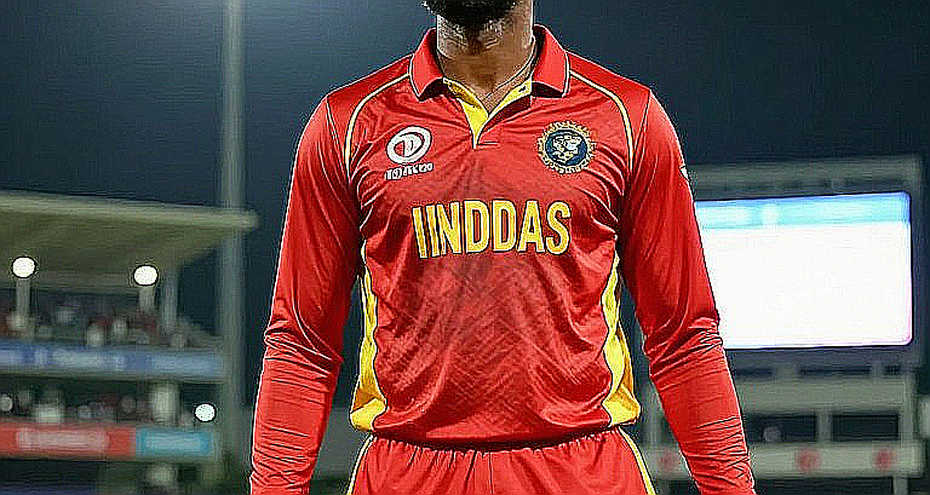
But the argument has a significant weakness that should be stated plainly. The entire selection evidence base is a three-match Youth ODI series. And that series was almost certainly played in India — Australia's U19 tour of India in September–October, which included two Youth Tests. In other words, all the selection evidence was generated in home conditions, while the tournament is in neutral, different conditions in Muscat.
That difference matters. Numbers produced at home lock in players who perform well in familiar conditions without any test of their ability to adapt to a neutral venue. Ishan Sood's inclusion as the sole change suggests the selectors believed he offered something specific that Gulf conditions demanded — plausibly a spin option or death-overs capability — but the report provides no basis to confirm it.
The Split Captaincy: One Team, Two Voices
The most interesting structural aspect of this squad is the division of captaincy. Lakshya Raichandani "continues to retain" the one-day captaincy. Yashbardhan Singh Chauhan, meanwhile, captained the two Youth Tests and is now named vice-captain.
This is a clear model of splitting leadership by format. Its advantages are straightforward: no single player carries the load across formats, and both players can develop expertise in their own role. At junior level this is additionally rational because players are still developing, and making one individual captain across every format can be risky.
But it carries a cost. One touring party ends up with two parallel lines of authority. When the pressure match arrives, it must be obvious whose call is final on the field. The report does not explain the formal rationale for choosing Raichandani for the one-day role — whether it is his one-day tactical acumen, his standing within the batch, or a decision to reduce format-specific load on Chauhan. That uncertainty feeds directly into external narrative: the question of "who actually leads India U19" creates confusion for media and audiences alike, and can place unnecessary pressure on two young players.
Two Wicket-keepers: Development Versus Game Time
Carrying two specialist wicket-keepers in a 15-man squad for a five-match tournament is an unusual call. Conventional selection logic says an extra keeper's slot is better used on an additional bowler or all-rounder, because one keeper can play nearly every game across five matches.
This means the selection is driven not by contingency planning but by development thinking. The selectors appear to value squad training, exposure to an international environment and bench security over game-time optimisation. That view makes sense if the board treats this event as a development milestone rather than a purely results-driven laboratory.
The downside is equally clear: one keeper plays four or five of the five matches, and the other may not play at all. If the group stage goes well, rotating the second keeper into a lower-stakes fixture would vindicate the thinking. If it does not happen, the squad will have carried a player who spent the entire tournament on the bench.
Lineage Framing and the Absence of Performance Evidence
Another aspect that must be read carefully is how two players are identified. Aaryavir Sehwag and Anvay Dravid are both introduced through their cricketer fathers rather than through their own records.
This is a structural reporting choice, not a sporting assessment. Treating it as a quality signal would be a category error. Who a player's father is does not determine how he will perform in the 50-over format. The report contains no averages, strike rates, centuries or wicket counts for either player.
A broader principle also applies here: at U19 level, variance in physical maturation is larger than variance in skill. Within the same age band, some players are physically a year or two ahead, which can make their performance look disproportionately strong. Drawing permanent conclusions from a single tournament is therefore the weakest possible method at this age.
Group A: Nepal, Pakistan and Hosts UAE
India are in Group A alongside Nepal, Pakistan and the United Arab Emirates. The composition of Group B is not disclosed, which means the likely semi-final opponent profile cannot be modelled either.
On paper the group looks two-tiered — India and Pakistan above Nepal and the UAE. But that assessment needs caution. Pakistan's junior sides have traditionally been known for producing genuine pace bowling early, a stylistic counter to India's typically spin-and-structure-oriented junior teams. The India–Pakistan fixture will be the tournament's biggest draw and plausibly the group decider.

Nepal cannot be taken lightly. Among associate nations, Nepal's junior programme is regarded as one of the strongest. India meet them first, on day two of the tournament, with limited prior read on conditions. This is the tournament's classic banana skin — a fixture that looks easy on paper and can prove difficult in practice.
Hosts UAE carry a different advantage: local knowledge of OCC surfaces. In age-group events hosted by associate nations, that knowledge routinely narrows the paper gap.
Muscat Conditions: What Is Not Known
The report contains no pitch report, so what follows is inference from general experience, not established fact.
Gulf age-group surfaces tend to be low-bounce and slow. Such surfaces reward spin through the middle overs and make boundary-hitting tempo a differentiator. Both the ability to hit big shots and the craft of turning the ball gain importance.
November in Muscat is post-monsoon and generally dry. Evening dew is a standard variable in day-night fixtures, but the report does not state start times, so dew impact cannot be assessed. This is information to be checked against the official schedule.
The Absence of Data: An Honest Acknowledgement
Full transparency is required here. The available information contains not a single individual performance statistic — no batting average, no strike rate, no economy rate, no wicket count, no ages.
In this situation, commenting on any player's technical quality would be invention. What can be analysed rigorously is limited: squad structure, selection logic, leadership architecture and the tournament landscape. Admitting that is methodological honesty, not weakness.
One further point deserves clarity. The team won the Youth ODI series against Australia 3-0, but that is a three-match sample. Three matches is a very small basis for any conclusion, particularly in home conditions. Projecting that series form directly onto Muscat conditions would be a methodological error.
Risk Assessment
The biggest sporting risk is adaptation, not opposition. This team has so far been measured only in home conditions; Muscat is neutral, slower and lower-bounce. Facing unfamiliar conditions in the very first match, on day two, without prior experience is India's most immediate challenge.
A second risk is the basis of selection. The entire 15-man squad was picked on the back of a three-match home series. It can fairly be said that this is among the lowest-information selector inputs available.
A third risk is the unknown bowling balance. Only the wicket-keepers' roles have been stated, so the pace-to-spin ratio is invisible. On Gulf surfaces that single selection decision is the most likely determinant of the tournament outcome.
A fourth risk is workload. This cohort played two Youth Tests in September–October, then three Youth ODIs, and now an Asia Cup in November. That is a compressed calendar for teenage players, and a soft-tissue or stress-injury window for the pace bowlers. The report contains no fitness or workload information.
A fifth risk is narrative. If a high-profile name has a poor tournament, the Indian media cycle can invert very quickly from "next generation of stars" to "nepotism". That reputational risk lands entirely on a teenager, and the board should pre-empt it.
Expectations and the Reality Gap
India are the structural favourites for this tournament — but that claim rests not on any published data, but on system depth and a 3-0 home win. There is no evidence at all about how this team performs in conditions like Muscat's.
Where the expectation gap is widest is clear. Expectations around team results are reasonable: as the strongest side in Group A, a semi-final is a fair baseline, and the title is a coin-flip-plus. But expectations around individual performance are entirely unsupported, because no player data is available.
For captain Raichandani the picture is slightly different. His retention of the one-day captaincy, with a vice-captain structure behind him, is real evidence of leadership standing. Nothing about his batting or bowling output can be verified.
A broad historical pattern should also be kept in mind: the conversion rate of strong U19 performers into established senior internationals is low. Among those labelled "the next great player", it is lower still. Transferring any judgement from this tournament to senior-level or IPL assessment is therefore dangerous.
What to Watch
First and most important: official confirmation of the edition year and the full schedule. If the squad list or dates differ from this report, the entire timetable changes.
Second: the scorecard from the Nepal fixture will reveal India's bowling composition. If the team fields three or more spinners, the management is reading Gulf surfaces as spin-friendly. If three or more seamers play, the reading is the opposite.
Third: the result and margin of the opener. A narrow win or a defeat would both signal adaptation problems and sharply raise the stakes of the Pakistan fixture.
Fourth: Ishan Sood's role and game time. His being the only change suggests the selectors wanted something specific; it will be revealing to see what that attribute was.
Fifth: the actual output of Aaryavir Sehwag and Anvay Dravid. This is the real test of the report's central narrative — whether lineage noise gives way to performance.
And finally, the most valuable use of this tournament is not the result but the record. A list of 15 names attached to a defined event is a clean entry point for a multi-year development-tracking dataset. That is the true substance of U19 cricket: far more than wins and losses, it matters who ends up where.
Source and Verification Note
This report is based on a single-source, unattributed media report and general cricket-industry knowledge. Wherever general knowledge or inference has been used, it has been explicitly marked. The available information contained no individual performance statistics, and no statistics have been invented. Squad composition, match dates and group structure should be verified against official BCCI and ACC announcements. This material is for sports-information and industry-analysis reference only; it does not constitute betting advice or a prediction of results. Age-group outcomes are inherently highly uncertain and individual development trajectories at U19 are especially volatile, so all conclusions should be treated as probabilistic and provisional.